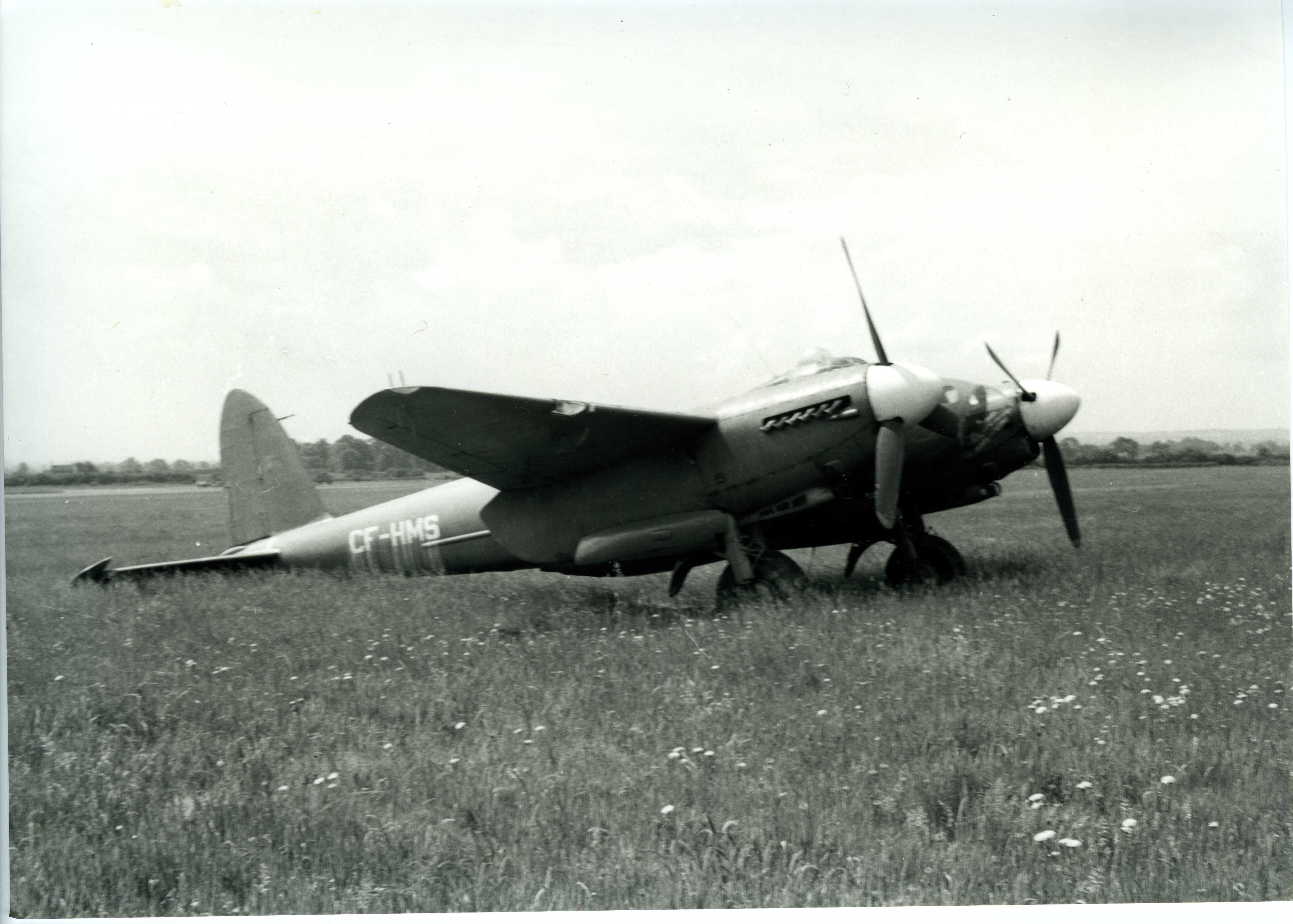
Click on any image for a slideshow!

Happy End of New Year Quarterly Report
Good year. Lots done. Hitting some milestones with Hurricane engine, Mossie wing, etc. Pour yourself a cold one (or a warm one as you may prefer) and read on!
Hurricane
Lots on the go during the quarter. We moved the Hurricane's Merlin 29 engine from Jack's hangar at the Calgary International, down to the shop at the Bomber Command Museum on October 31. We had some tweaks to do on the engine and we needed to put in some serious run time to help break it in; all of which is much easier to accomplish at the museum.
With our full volunteer crew on hand the next day, and with the ongoing assistance of Bomber Command's key Lanc and Merlin guy Dr. Brian Taylor, we did a successful run. With Jack on the throttle, the engine started in less than a half rotation of the prop. Despite having an oversized radiator, the cooling system still limits the duration of the engine run to about 10 minutes before it starts to boil over.
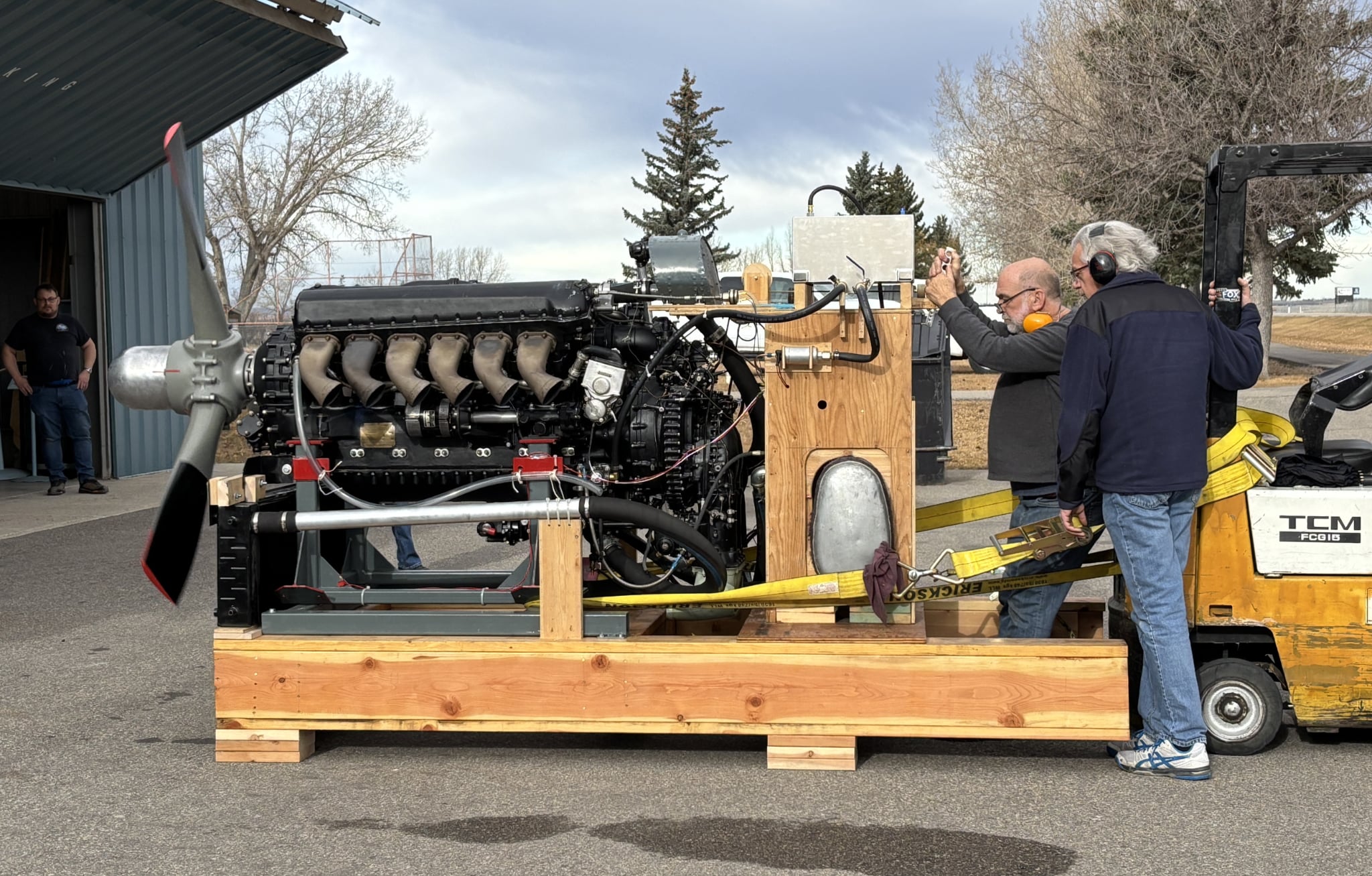
Jack M. on the throttle with Prez Richard looking over his shoulder for the first run of the Hurricane engine after we moved it down to the Bomber Command Museum, Oct 31. Easy start, good run and no exploding coolant hoses. Yea!
Prez Richard got hands on with the engine for the first time, the following weekend for two successful runs. Prior to each run, we now do a briefing with our team so that everyone is clear as to the plan and purpose for the run, that at least two fire extinguishers are manned, that safety fences and ear protection are in place and that all eyeballs know what to look for, should there be problems with the engine. Once warmed up to safe operating temperatures and with the engine powered up to half power, we did a magneto check. Shutting off the right magneto resulted in a significant drop in RPMs and we had to quickly bring it back online. If the engine is to run after we hand it back to the City, then this needs to be looked at.
For the sake of a little background and context, it's important to understand how and why we got to the place of restoring both the Hurricane and Mosquito to 'run and taxi' status. Our campaign to prevent the overseas sale of the Mosquito and the export of the Hurricane, began in October 2007. When the City of Calgary sought outside expertise to determine the significance, relevance, history, restorability and costs associated with keeping the airplanes, they went to Byron Reynolds of Historic Aviation Services in Wetaskiwin, AB for an objective perspective.
In a lengthy written report submitted to the City in September 2009, Reynolds concluded that both airplanes were rare, valuable, historically significant to Canada and Alberta, and that both were readily restorable. He outlined three standards for restoration and the costs associated for each: Static, Run and Taxi and Flying. Calgary City Council chose the middle ground of 'Run and Taxi', and provided half the funding to bring the airplanes to that status. Had they wanted the airplanes restored to the lower standard of static display only, they could have saved taxpayers many hundreds of thousands of dollars. Thus, the requirement to restore the Hurricane and Mosquito to 'Run and Taxi' status was written into the contract that we signed with the City in August 2012.
Remembrance Day ceremonies and services were very well attended at the Bomber Command Museum and in discussion with our hosts, we suggested that if the weather looked favourable, we could do an engine run immediately after the wreath layings at the cenotaph. Well over 500 people attended the ceremonies, at the end of which, the crowd was directed to the ramp where we had the engine ready to go. Thankfully she did not let us down and we had our first successful public run. Our thanks to volunteers Dick S., Davy D., Trevor J., and Michael H. for coming out early and being part of the engine run team.
For the sake of building up more run time and checking a couple of coolant leaks, as well as letting our supporters know, we did a run for Mosquito Society Members the following Saturday. Our Civic Partnership Consultant for the City of Calgary, Sean Roach, attended with a couple of his young'uns in tow, as did Hangar Flight Museum Executive Director Brian Dejardins. Thanks to former CMS board member Peter Cromer, we have some great video of the Merlin Engine Run
If you like the higher power and RPM sounds, skip ahead to 4:55.
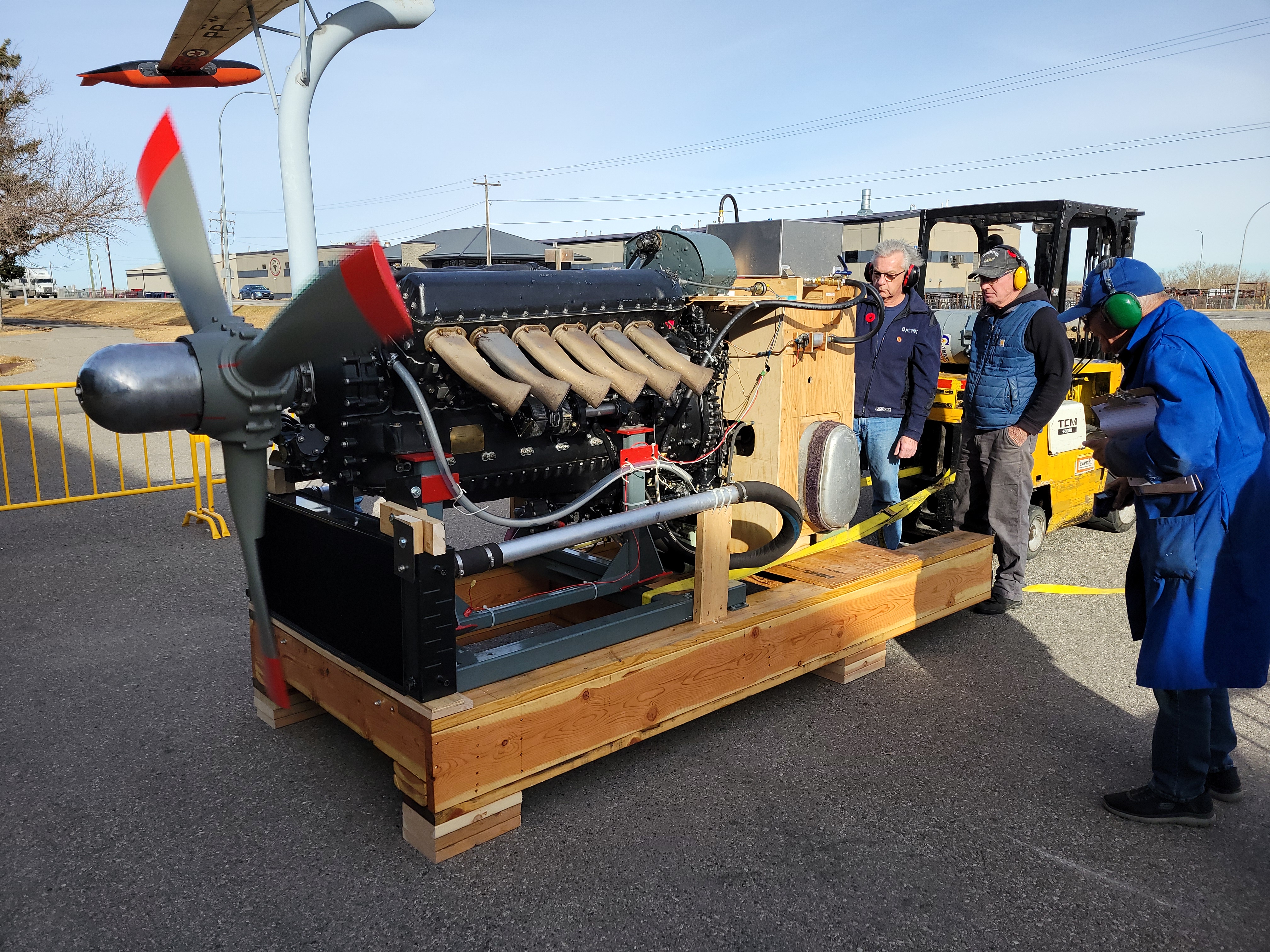
Prez Richard's first time on the throttle, aided by Dr. Brian Taylor and CMS board member and super volunteer, Dick S. The experience was rewarding, intimidating and fun. (Photo Steve S.)
The key point here is that after all the hundreds of hours and tens of thousands of dollars invested, as well as years of trials and tribulations, it looks like we have chased away all the gremlins and that we now have a smooth, easy starting, reliable Merlin engine for the Hurricane. Thanks to team lead, Jack M. and to our many volunteers who invested hundred of hours of their expertise and elbow grease.
The next step its to get it reinstalled and running in the airframe, thus completing our contractual obligations with the City of Calgary.
Mosquito
Jack McWilliam
We close out the year with lots of accomplishments, challenges, and projects on the go. I have not been onsite as much as I wanted to be, as some tropical winds needed sampling, and my day job had me 'south of the line' for all of December.
Regular volunteer Steve S. noted this past Saturday that we have turned the corner on wing work, and he was pleased with how quickly things were going back together. I thought it best to not mention how long ago we re-jigged the wing and began the process of stripping out all the electrics, mechanicals and then the wood itself of all grunge, dirt, paint and primer (Just over four years, BTW). That said, as Aesop noted two and a half millennia ago, 'slow but steady' also produces some great results for the patient, and the realistic, when it comes to aircraft restoration.
The underside of the wing is going back together well, led by Michael H. along with recent contributor David H. as they are reshaping and repositioning a spaghetti bowl of copper grounding straps back into their original places. It is no small feat to retrace the original route of this wire after all of the fuel tank bays, bomb bay and wheel wells have been completely stripped of all mechanical components, wiring, twenty years of grease and grunge and multiple layers of paint. A couple of months ago, Michael H. went to Prez Richard, for pictures as he had diligently photographed the entire underwing area after the fuel tank bay covers and fuel tanks themselves had been removed. These photos, along with tiny little painted over nail holes, provide us with the best information as to how it all goes back together.
I have also recently sourced a supplier in Ontario who can provide us with different grades of felt for all of the fuel tank to airframe contact points including the curved wood corners and metal holding straps.
When we stripped the underside of the wing, we had crates for each of the twelve-fuel tank, undercarriage and bomb bays, into which we stored all of the parts that we removed from each bay.
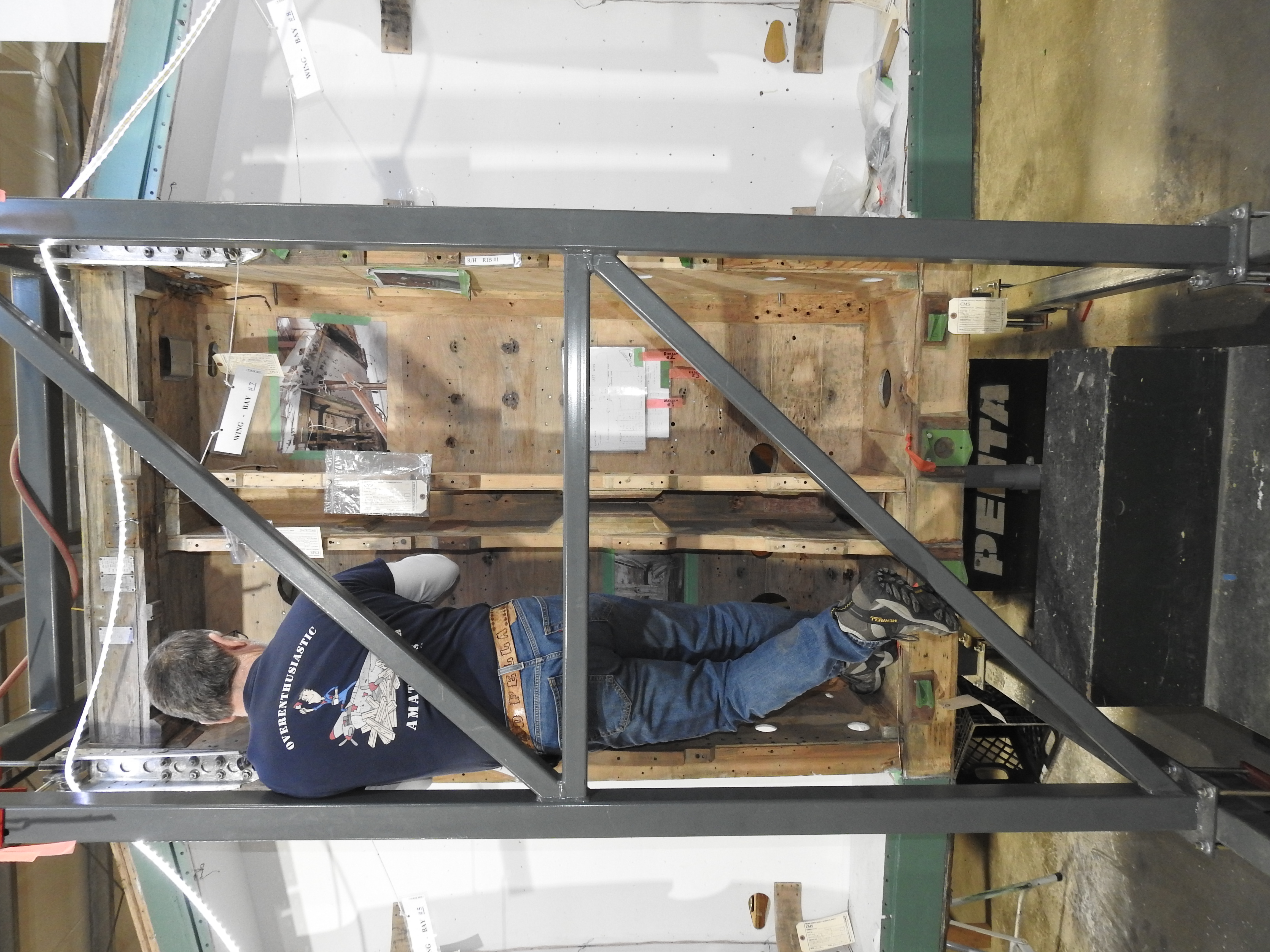
CMS board member Michael H. working in the bomb bay to reinstall all the mechanicals and grounding straps. The fuel tank bays on either side have already been repainted and equipment is being refitted.
Happily, most of those crates are near empty, with the bits and components now back in position.
We owe Don Bayley and Barry Halliwell another round of applause (drinks?) and a hearty thanks for having manufactured two dozen new threaded rods for us, just in this quarter, and well over a hundred in the past two years. These are the steel rods that penetrate both the front and rear wing spars and are used to hold all metal brackets, fittings and castings to the wooden airframe. Even with Alberta's very low humidity, the wood holds enough moisture to severely corrode the metal rods after some eighty years. Barry informed me that each rod takes over an hour to make. Big, big thanks to Don and Barry.
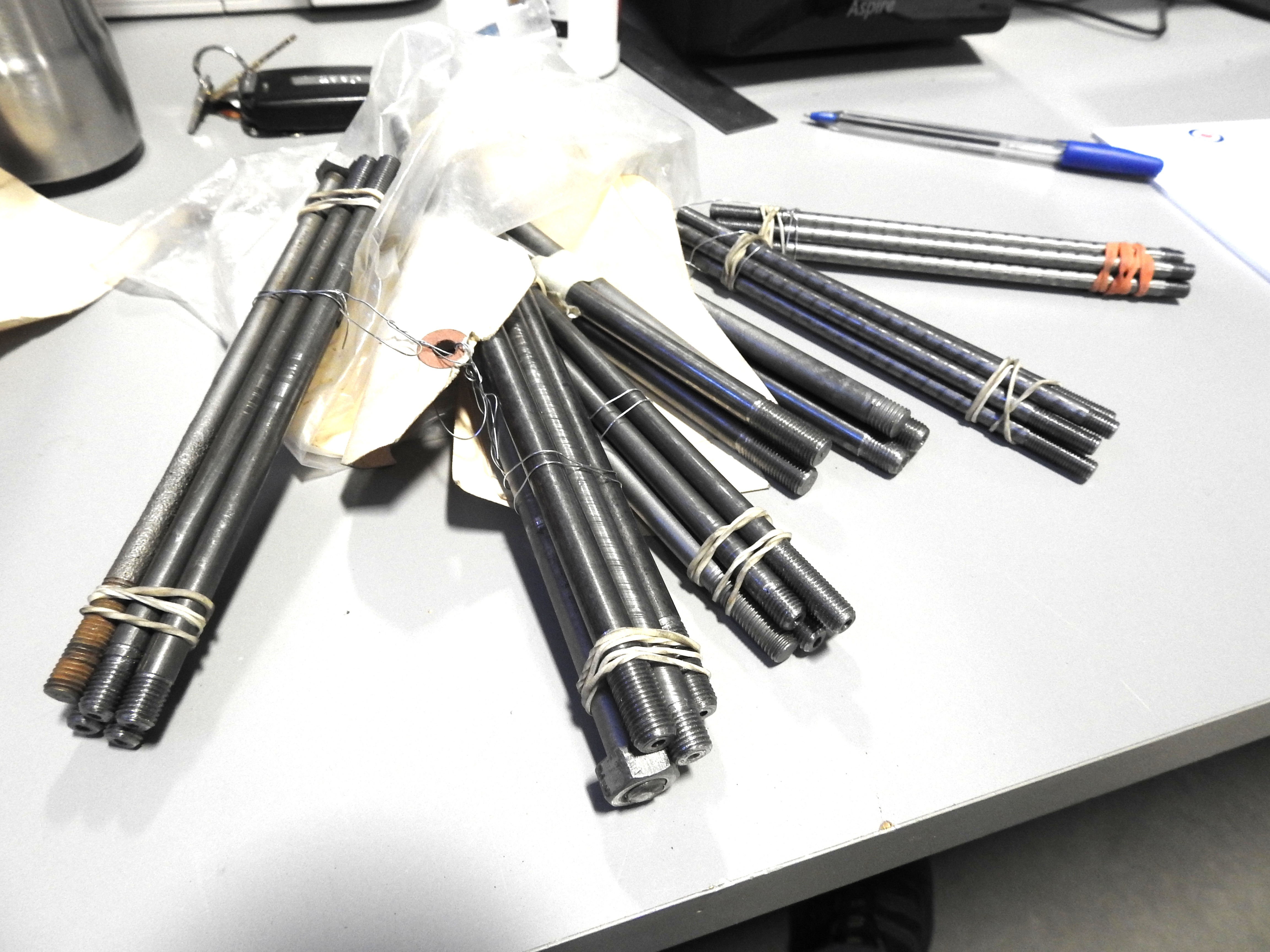
The latest batch of threaded rods made for us by Don Bayley and Barry Halliwell. Each take about an hour to make.
Before the rods get reinstalled, Don H. takes them for plating so that they are corrosion resistant. Along with getting parts welded, bead blasted and/or powder coated, this is the sort of work and significant time and miles that Don puts in on the project between his Saturdays in the shop as our rear fuselage expert. When the rods are ready to go, Joe M. has been our man to figure out where the rods get used to reinstall the metal fittings and castings for the flaps and ailerons along the rear wing spar. Joe is also looking to see how many of each size and length of rod is yet required. It looks like we are coming to the end of the rod manufacturing business with just a few larger diameter rods yet needed.
Also working on this area where wing wood meets metal, Dick S. is attaching the new walnut plates to the rear wing spar. Our master wood man, Gary T., has whittled new walnut mounting plates for us where the originals have split, shrunk or just mysteriously vanished. The walnut plates are needed where there are significant stresses, such as flap attach brackets, and something sturdier than spruce is needed. Dick is now within a week or so of glueing them in position on the starboard side of the rear wing spar. Once this is done, Joe will pick it up from there to install the hardware (before Jerry M. gets home from playing 'snowbird' in Arizona) which should consume a major chunk of cleaned and coated metal parts awaiting reinstallation.
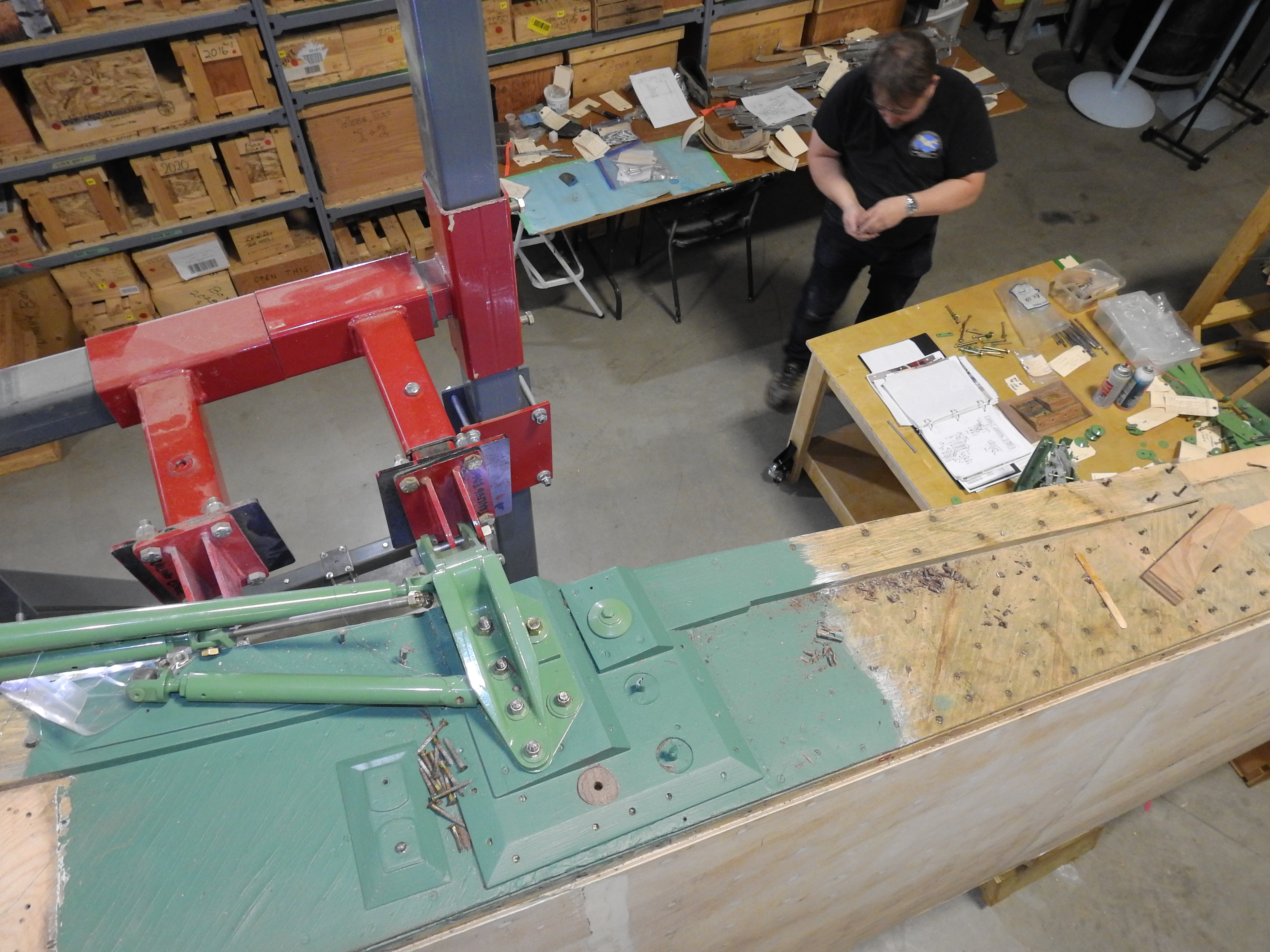
As the wing is positioned with the leading edge to the floor, we are looking down at the rear spar. From here we can see Joe M. sorting bits to get reinstalled. This also shows the new walnut plates (the rectangles with the beveled edges) and some of the newly made threaded rods to hold them all together.
Just when you thought we were done with wing talk, we have Gary T. and Trevor J. hard at work on our wing flap hydraulic actuators. This was a project that Jerry M. began last year, but which was complicated and frustrated by a significant amount of corrosion. It is quite apparent that these have never come apart since they were new and that time, moisture, seal deterioration, and gremlins have done their best to weld everything together permanently. Of course, we cannot discount the never-ending wonder that is British engineering that uses multiple sized, near invisible pins holding parts together -with the pins varying in diameter by just thousandths of an inch. After a variety of attempts that have included long term solvent submersion, teams of wild horses and a thesaurus of 'colourful' phrases, Gary T. constructed a puller that facilitates removing the tops and the bottoms from the body of the flap actuators. We are fortunate to have a couple of spare flap actuators, as there have been casualties---
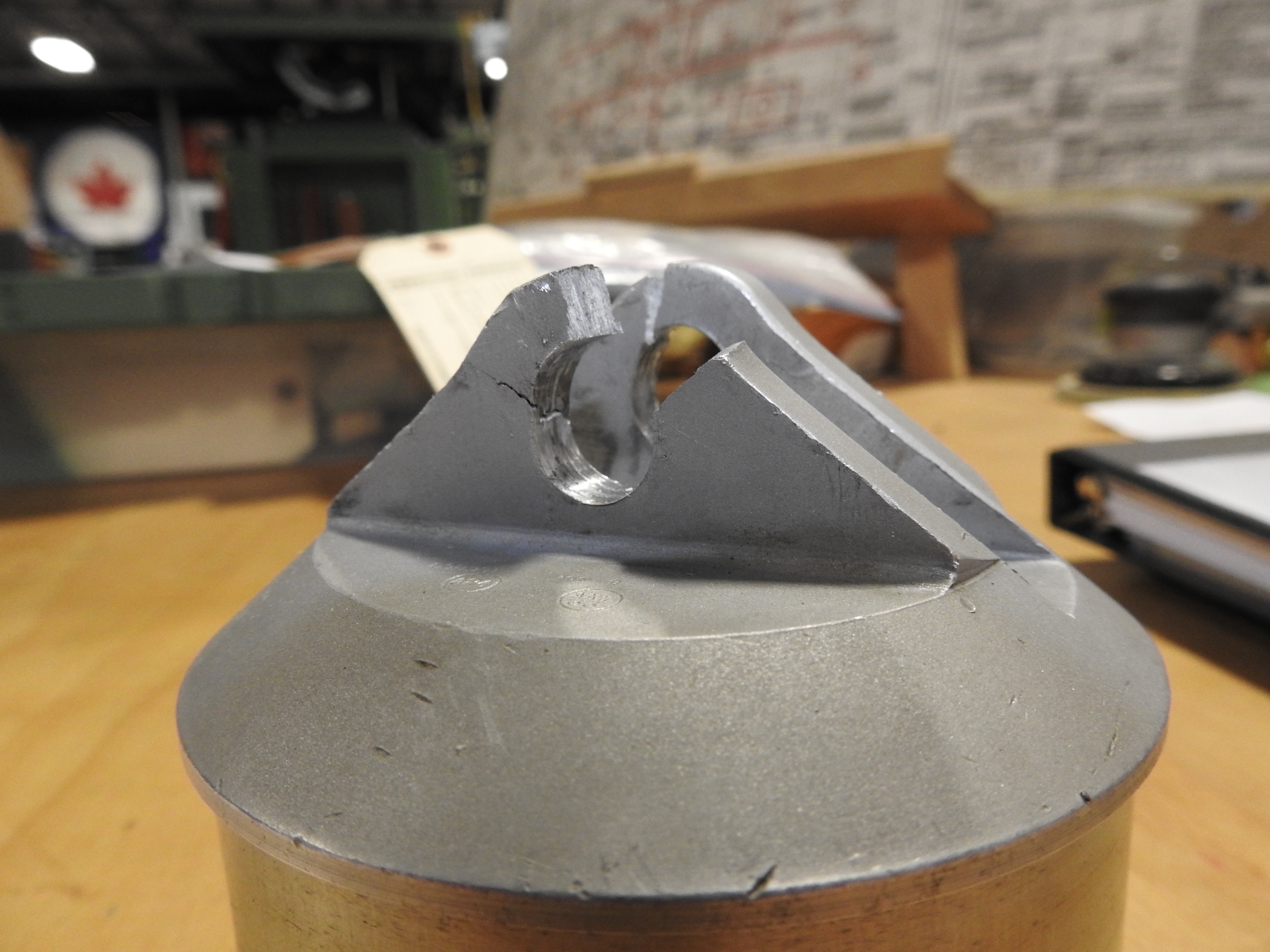
A severely corroded flap actuator that did not survive the learning process… Thankfully we have spares and we salute this brave comrade, having died in the cause.
Once apart, Trevor J. has tackled the glamorous job of cleaning them up. Unfortunately the internal pistons and rods are also badly corroded and will need to be coated to make them serviceable again. Also putting in time between Saturdays, Trevor has been racking up some hours and kilometers sourcing new seals from hydraulic suppliers in Calgary.
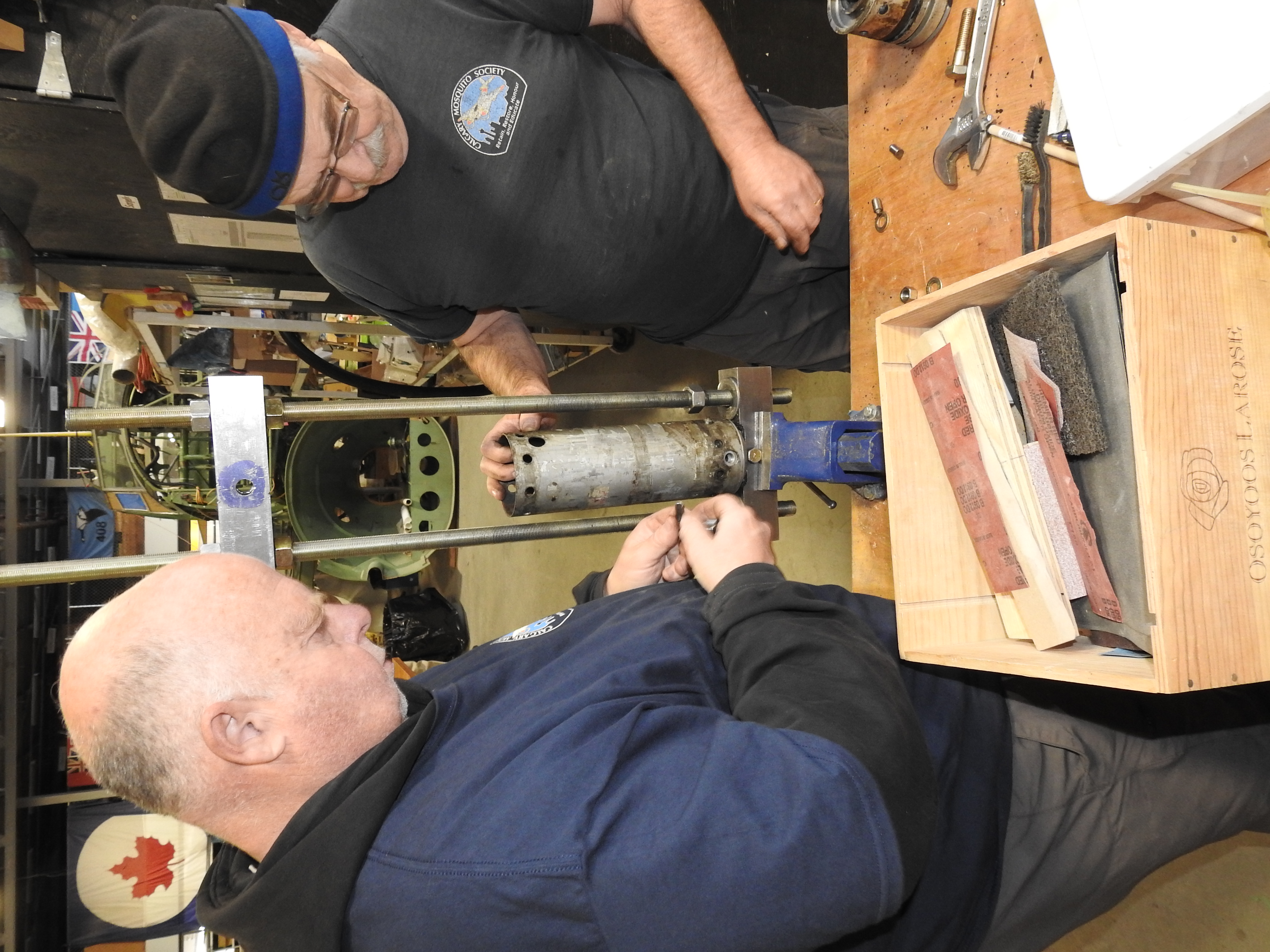
Trevor J. and Gary T. working on a flap actuator with their newly designed puller. All of the actuators suffer from severe corrosion and will need new seals, internal coatings and a lot of TLC.
Still in the wing department, Gary T. continues with his upper skin replacement work, now going on three years, but happily, with an end in sight! In mid-October, Gary put a Sunday crew together to help install the large single piece skin adjacent to the center section. Putting in some 'overtime' with Gary, were Alan W., Dick S., and Richard de B. All the glueing, screwing and swearing went to plan, leaving just one section of upper wing skin yet to replace: that being the center section itself.
As has been previously described, that means first removing the original skin with a router, one noisy wood chip at a time. Sensitive to the loud noise generated by the router, Gary has done all of the skin removal during the week, rather than on Saturdays when our regular crew is in. The times available to Gary have been limited since September as the high school in Nanton is under renovation and they are renting space in the museum for afternoon use. Despite the additional restrictions, Gary has managed to buzz all but a couple of square feet from the last skin. Because this area of the wing is also used to mount a large quantity of equipment, there are numerous blocks under the upper skin, many of which need to be repaired and reattached.
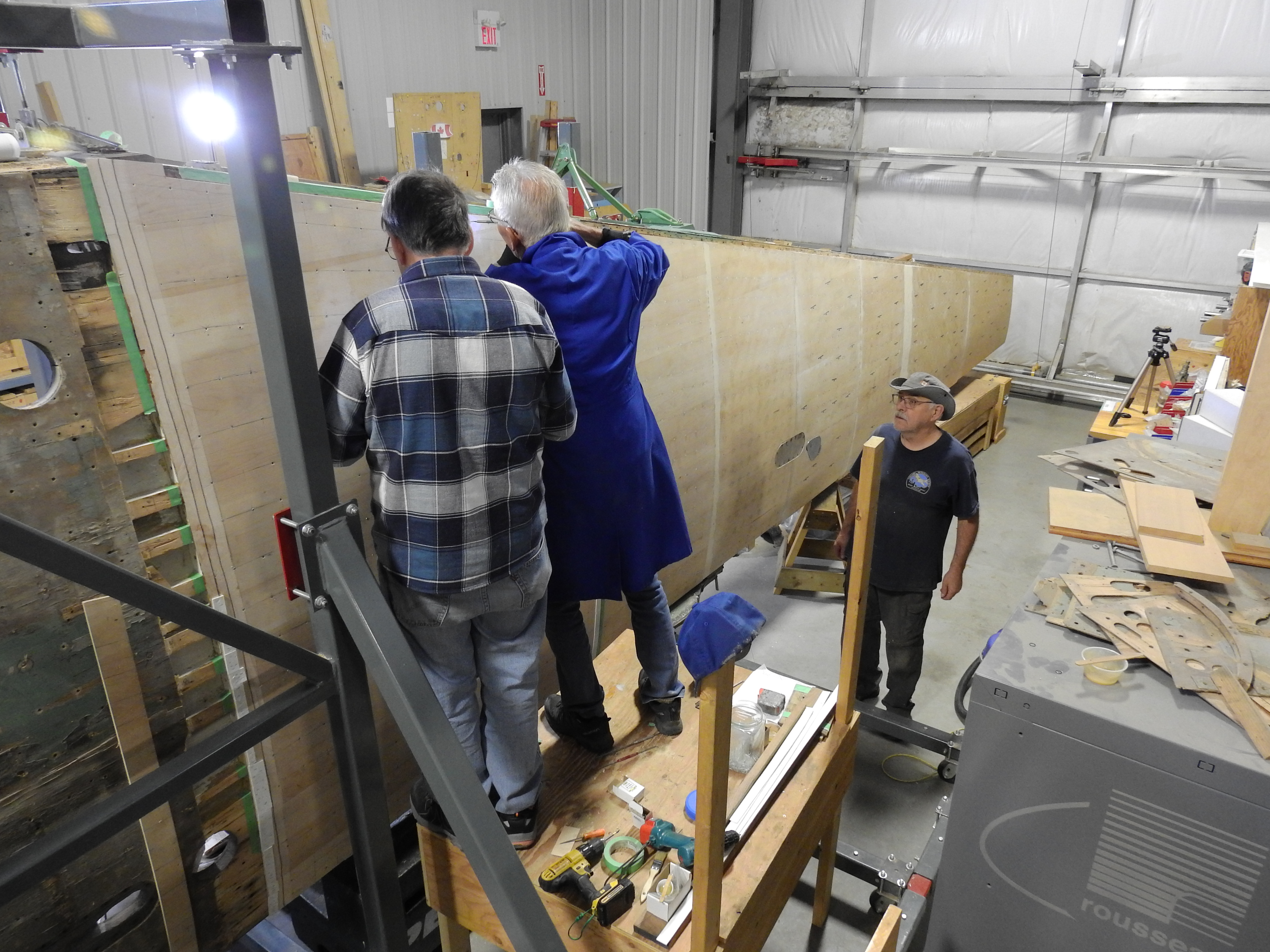
The Sunday 'overtime' crew, consisting of Alan W., Dick S. and wood boss, Gary T., installing the second to last, top wing skin. This large sheet needed many hands to position, glue and screw in place, after which we observed the tradition of 'burger and beer' for a self congratulatory 'job well done'.
While stripping paint from between the wing stringers, Gary also came across a sizeable section of penciled notes from when the wing was assembled in 1946. As we have done elsewhere, we will leave the pencilled notes and varnish over them, rather than cover them with primer and paint.
Before the first quarter of 2026 is over, Gary should have completed the replacement of the center section skin, thus completing the top wing skin replacement for the entire wing. Once done, Gary will move on to rebuilding the trailing edge of the wing. This portion of the wing was very badly damaged when it was left outdoors at CFB Cold Lake, circa 1990. At some point, to facilitate the trailing and leading-edge wing work, we will move the wing from its vertical orientation to its normal horizontal position. It's another major milestone in our progress, but we note that the wing will take up much more room in the workshop when laying flat.
With Jaime G. having all but completed the restoration of one main landing gear, we have set a team including Davey D., Colette P. and Alan W. to work on cleaning the major components of the second main landing gear, including the lengthy gear struts. This also means stripping all the minor parts from the gear and understanding how it works and whether or not we have all the necessary little bits. With hydraulic folding mechanisms, uplocks and down locks, compression struts, pneumatic brake lines and gear door opening/closing mechanisms, we begin to understand just how incredibly complex is the undercarriage. Once the disassembly, inventory and cleaning stage is complete, Don H. will be hustling the big bits off for final cleaning as they are too long for the museum's bead blasting machine, and once suitably blasted, Don will return them to our Cam B. for painting.
Don H. and Andy W. continue to plug away on the fuselage interior with Andy on the cockpit and Don aft fuselage. When operated by Spartan Air Services, the Mosquito was required by Transport Canada to have a fuel dumping system because of the third crew member in the rear fuselage. After a too long search, we were recently able to acquire a load of large diameter, soft aluminium tubing so that Don can remanufacture this system which runs the length of the fuselage and out the tail stinger.
We were again able to take advantage of younger folk's knowledge and old folk confounding 21st century technologies, in having Matthew S. do some 3D printing for us, this time for an angled bracket for the brake pressure gauge.
Andy continues his work in the cockpit area utilizing some newly developed sheet metal and brazing skills. He has also devoted a lot of weekday time to understanding what navigation and communication equipment Spartan had in the Mosquito.
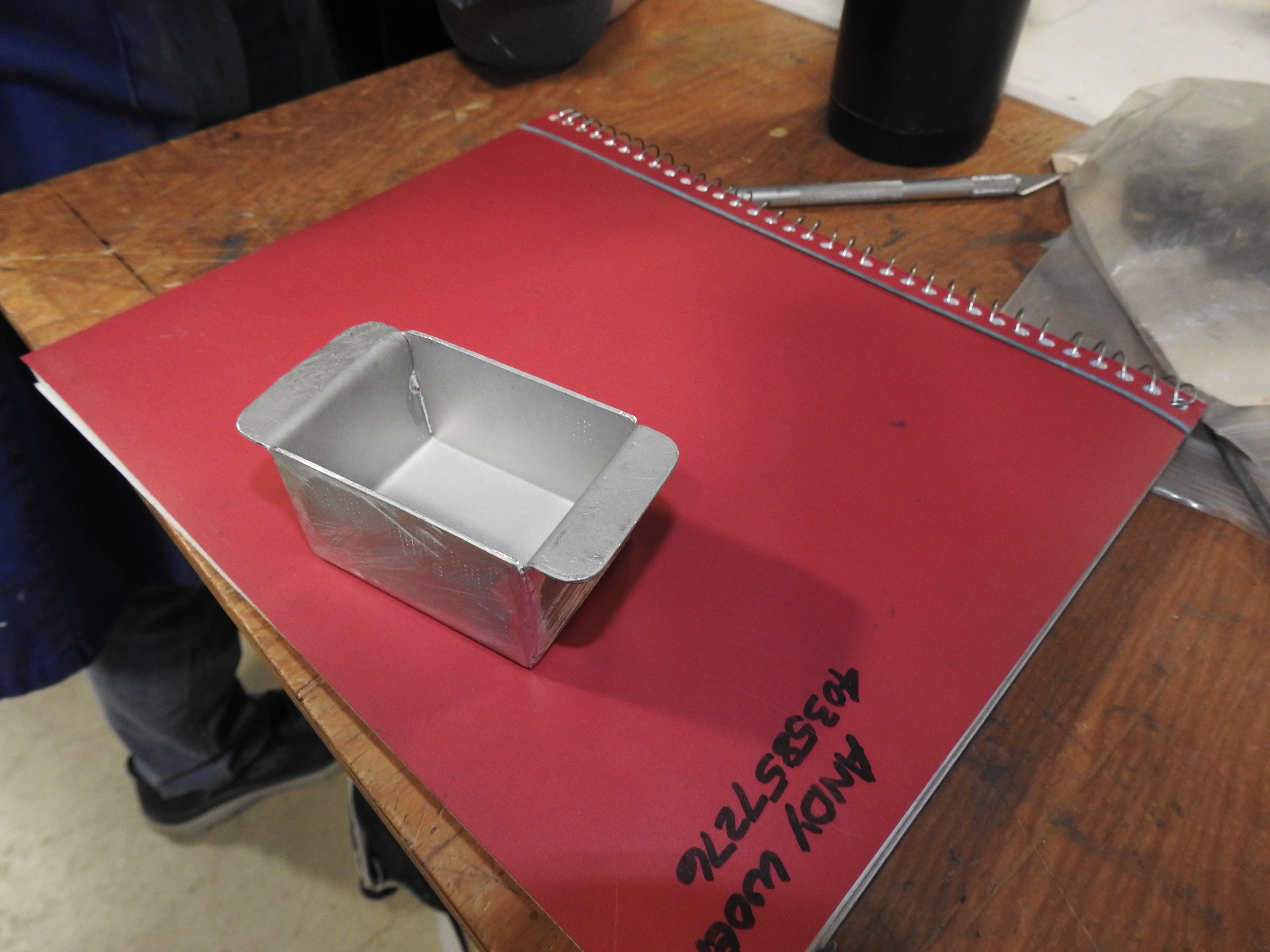
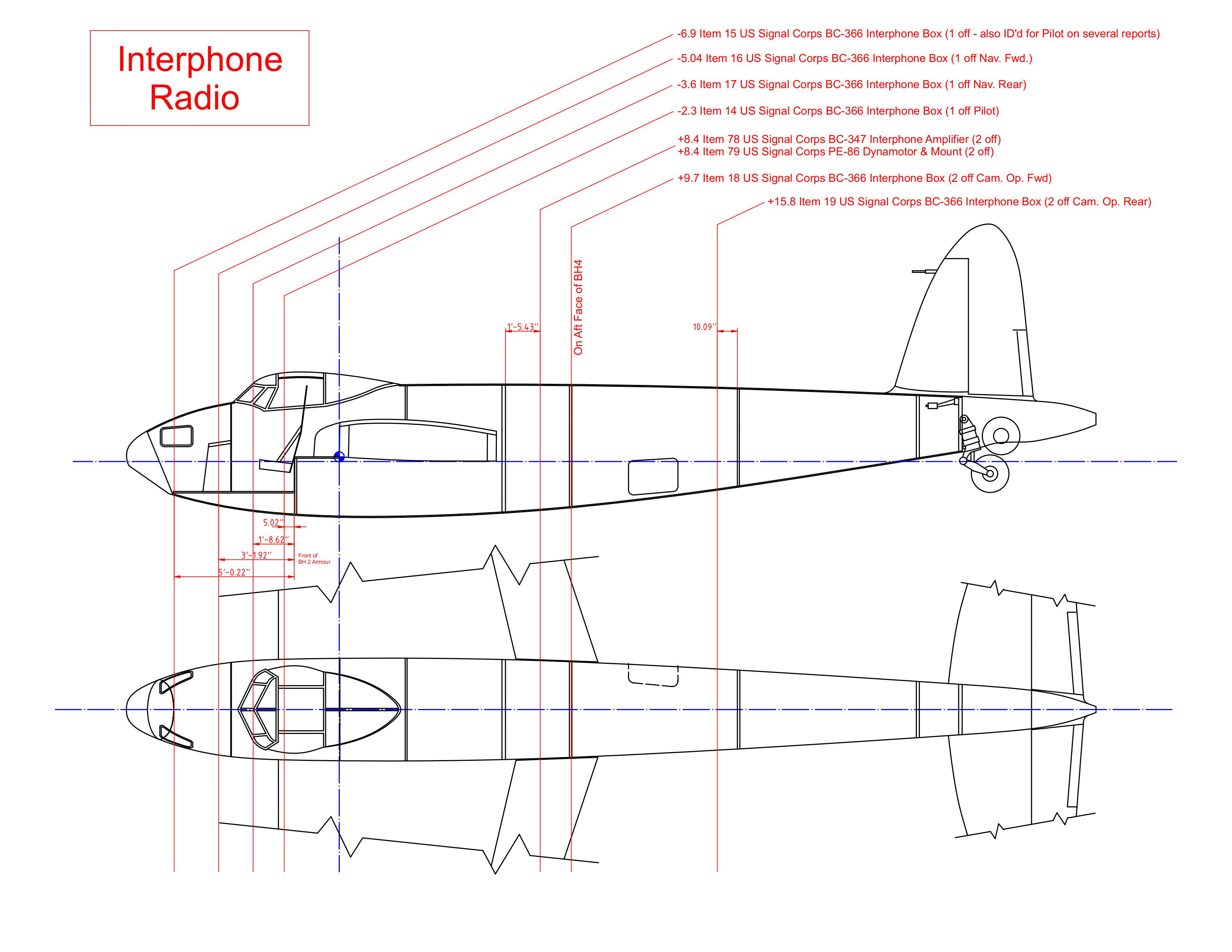
Some of Andy W's handiwork in aid of cockpit and systems restoration. Top, a sheet metal switch box with brazed seams for the instrument panel. Bottom, one of 10 new drawings created by Andy, showing where in a Spartan Mosquito such things as Interphone, VHF, HF, Gyrosyn Compass, Oxygen and Survey Equipment were mounted. That is some serious weekday homework!
We know from Transport Canada records and the few Spartan documents we have, that the company used American, British and Canadian equipment, but also that they continued to upgrade and that it is very likely that no two Mosquitoes in their charge had exactly the same equipment mounted in the exact same locations. I am sure you can see the issues. With the information available, Andy has produced a series of drawings showing the location of all of the equipment installation locations used by Spartan throughout the Mosquito fuselage. These come primarily from weight and balance documents submitted by Spartan to Transport Canada in the late 1950s for Spartan sister ships, CF-HML and 'HMK.
Few of the radio, intercom and nav parts came with the airplane so we have begun to talk to a variety of experts and vendors to source the parts and components needed. We also contacted the Hangar Flight Museum, as one of our earlier parts sourcing expeditions into their storage trailers seem to have unearthed promising signs of former Spartan Mosquito radio and nav gear. Accessing these has become difficult as the museum is in the process of upgrading and organizing their storage trailers. We hope to put together a scouting and hunting party, with the museum's kind permission, early in the spring.
Events and Miscellaneous
The only event scheduled for this quarter were the Remembrance Day ceremonies outside the Bomber Command Museum on November 11. As is our tradition, we were ably represented by board member Brian C. who laid a wreath on our behalf. The weather was mild, which encouraged a large crowd of +500 to attend. Despite it being midweek and winter hours, meaning open weekends only, the museum opens for the day and we spend much of it, after the ceremonies, talking to visitors about our pet project. As was mentioned, we made great Merlin music for the crowd after ceremonies had concluded.
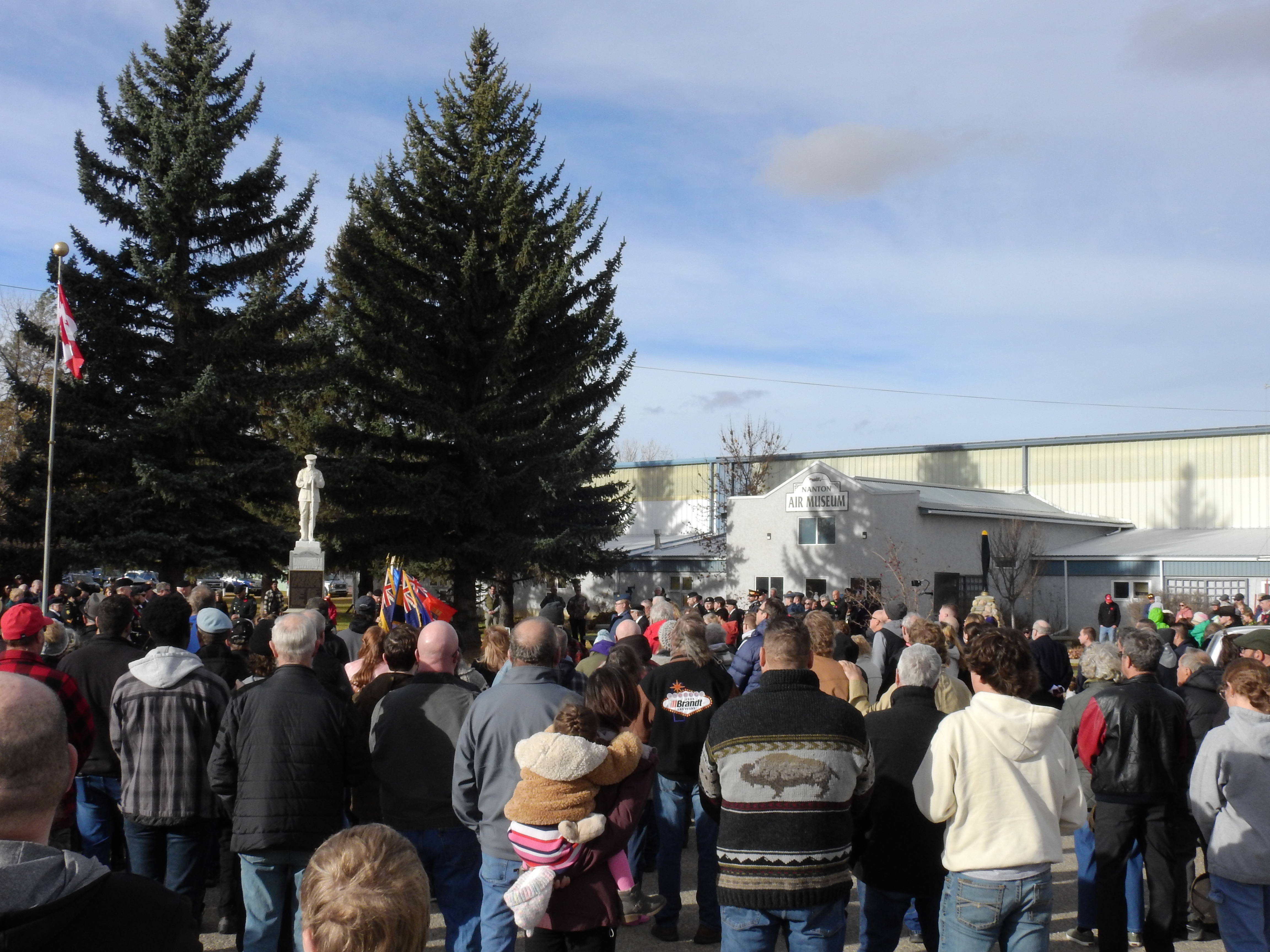
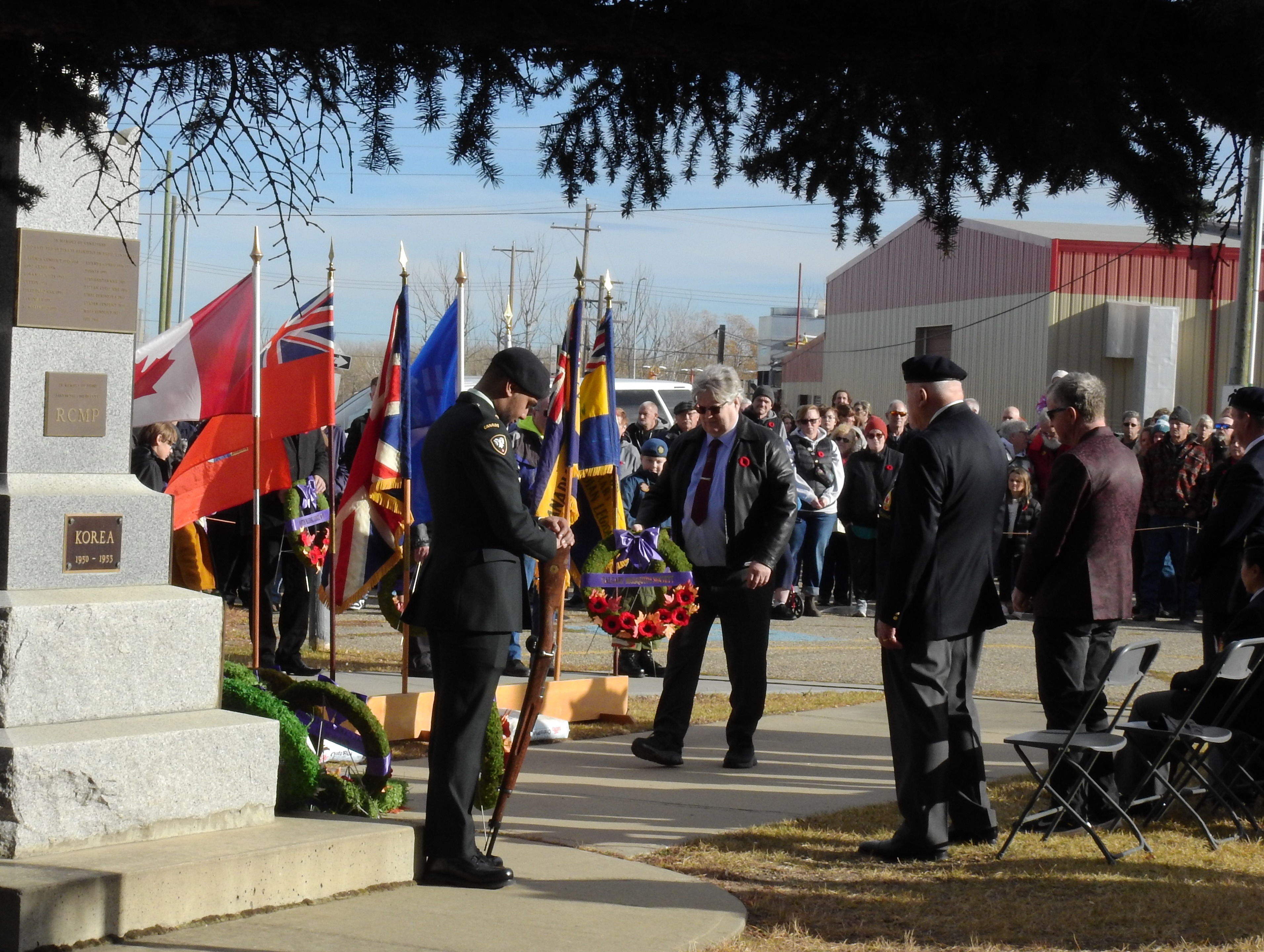
The mild weather facilitates great attendance for Remembrance Day ceremonies at the Bomber Command Museum. Bottom, CMS board member Brian C. maintains a longstanding tradition of his laying a wreath on our behalf, at the museum's cenotaph.
Not quite in the vein of Hurricane or Mosquito restoration, our volunteers continue to assist the Bomber Command Museum in the restoration of a Rolls Royce Merlin 66 engine, intended for their Spitfire project. The engine is a magnet for restoration buffs and a great learning tool for our younger members. On Saturdays when we have more willing members than woodwork, it also helps to cement good relations with our hosts.
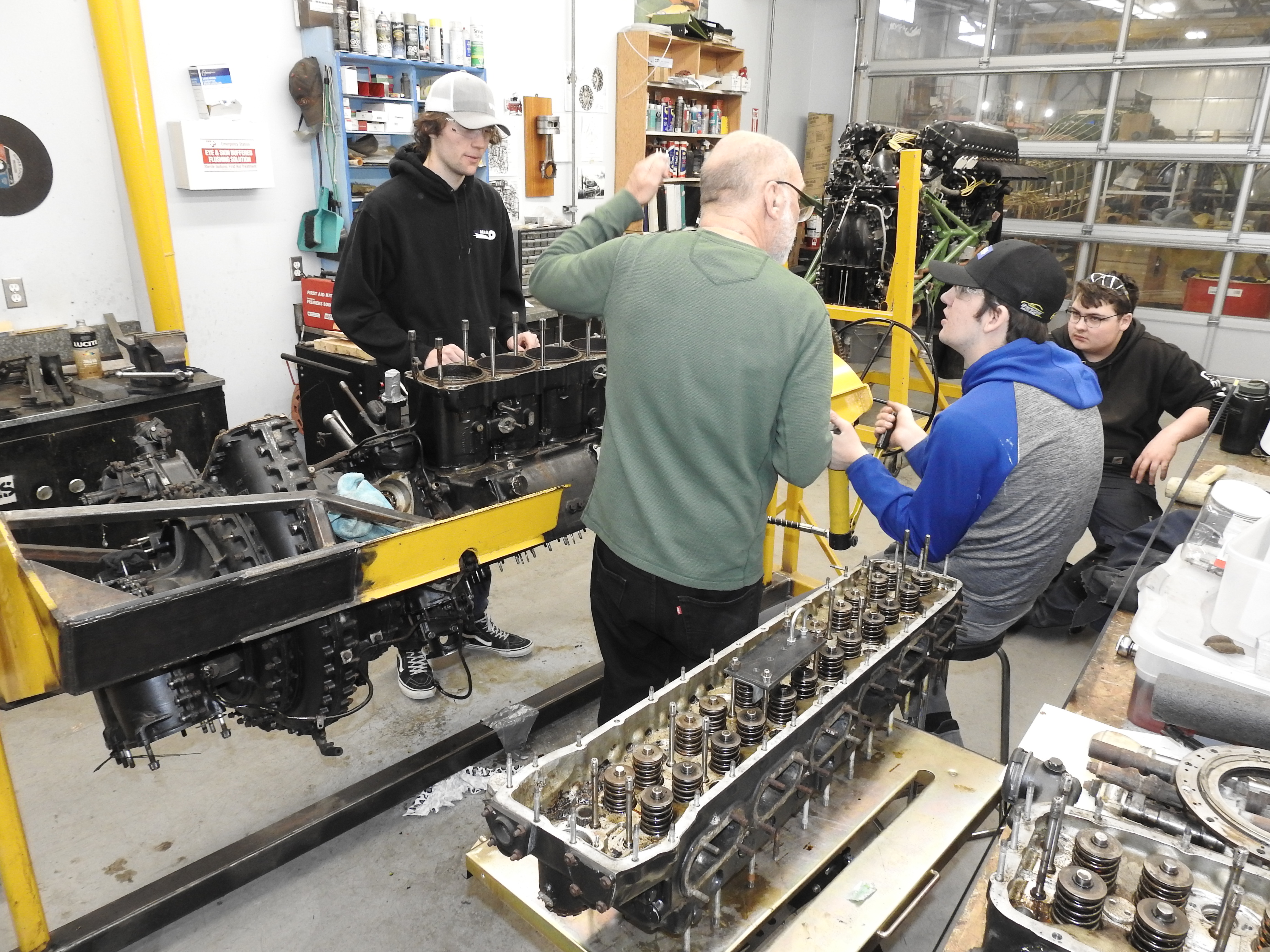
Restoration boss Jack M. working with Andrew and Matthew S. and Zach M. on the Merlin 66. Fun, educational and supporting our hosts at the museum. The engine is destined for the museum's Spitfire project.
We are happy to report an ongoing healthy traffic of parts to and from the good folks in Windsor, ON with the Mosquito Bomber Group of the Canadian Aviation Museum. In exchange for loaning them some bits earlier in the year, they manufactured some great new bits for our control column. Thanks to our Andy W. for organizing this. No sooner had these arrived when we had a request from Windsorian Mossie types for a hydraulic valve that we have and they don't. Eastward she went.
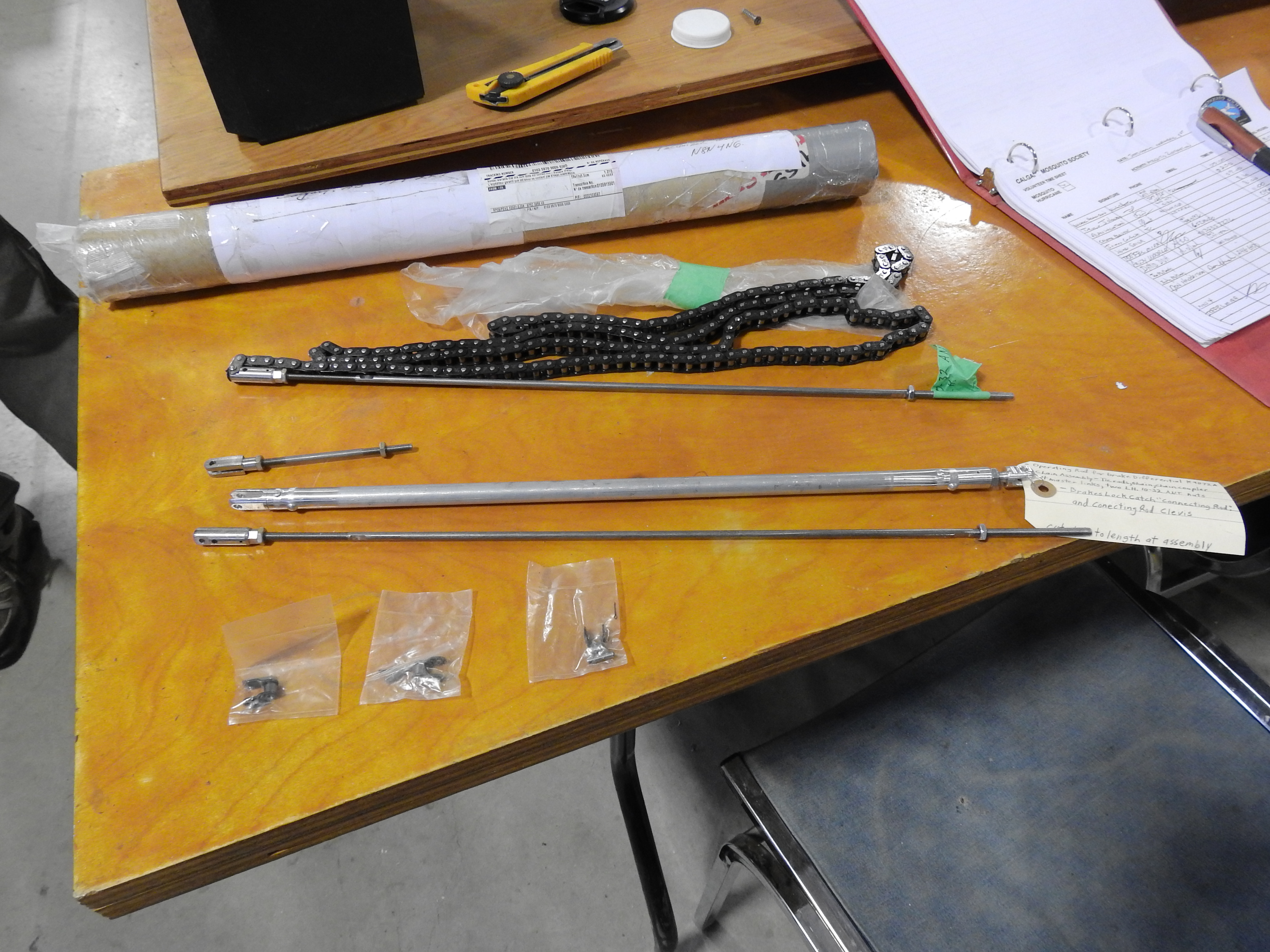
Newly manufactured, and in the case of the chain, newly sourced, parts for our control column, from our friends of the Windsor Mosquito Bomber Group.
Congrats to the Windsor Mosquito Bomber Group for getting their second Merlin engine running this quarter as well. We got a call from their project leader Richard Fox shortly thereafter advising us that they had to borrow an ignition harness from the Lancaster crew in their museum, and did we have a spare that they could acquire as they had to return the borrowed harness. I spent some time with Bomber Command's Dr. Brian Taylor in the parts loft and we located a good unit for them. We kicked the whole thing over to Bomber Command's curator Karl Kjarsgaard, and a deal is now in the work. Say 'yes', then make it work!
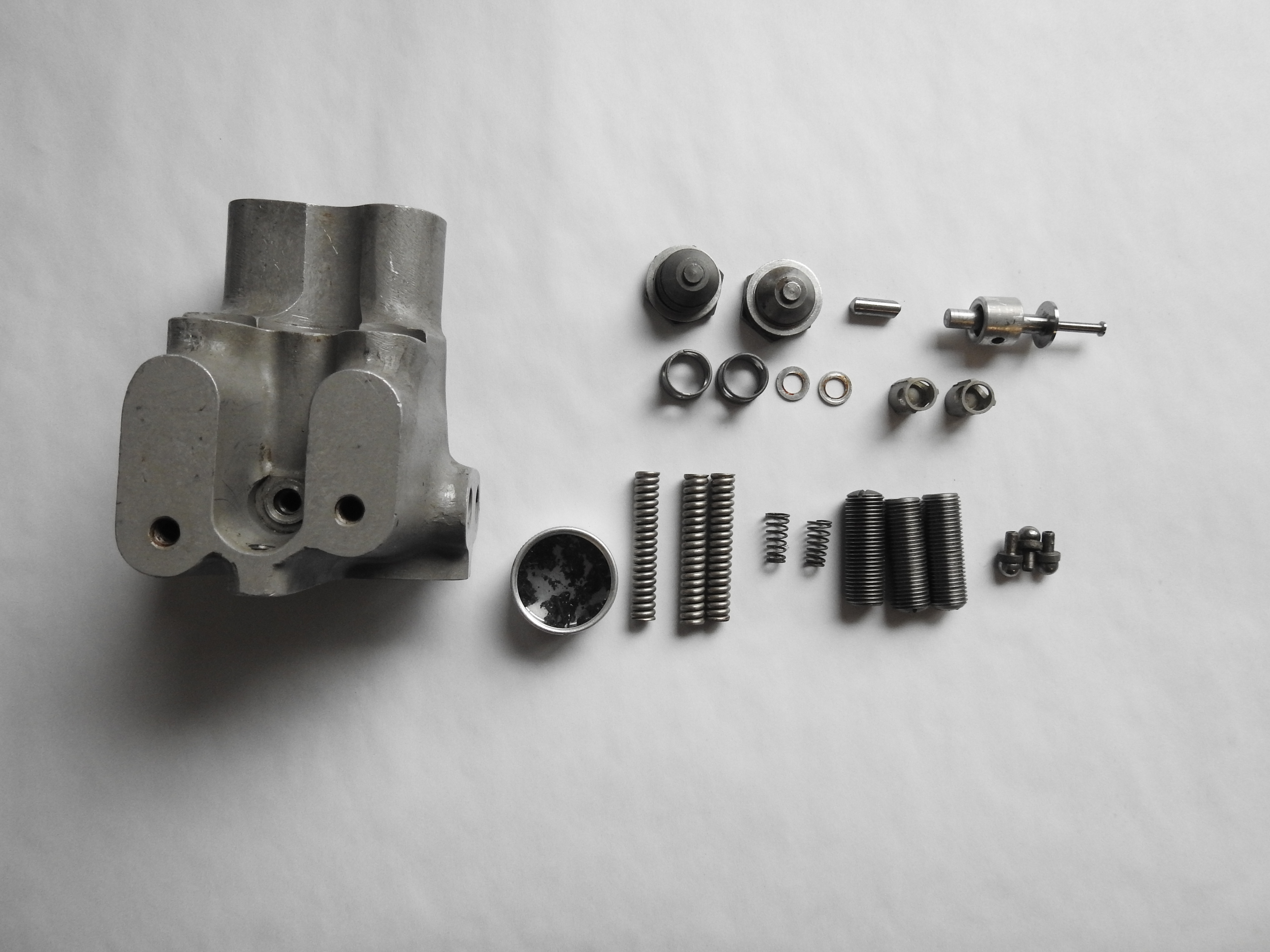
Lockheed AIR. 25146 hydraulic flow valve, requested by Richard Fox of the Windsor Bomber Group. We had one available and fired it off to them for some reverse engineering.
The fourth quarter means the end of the year, which also means that our 'help yourself' common food table gets loaded up on Saturdays. Long time volunteer Peter Vanderkloot, who left us five years ago for Ontario, still arranges for traditional Dutch treats for us. Thank you, Peter.
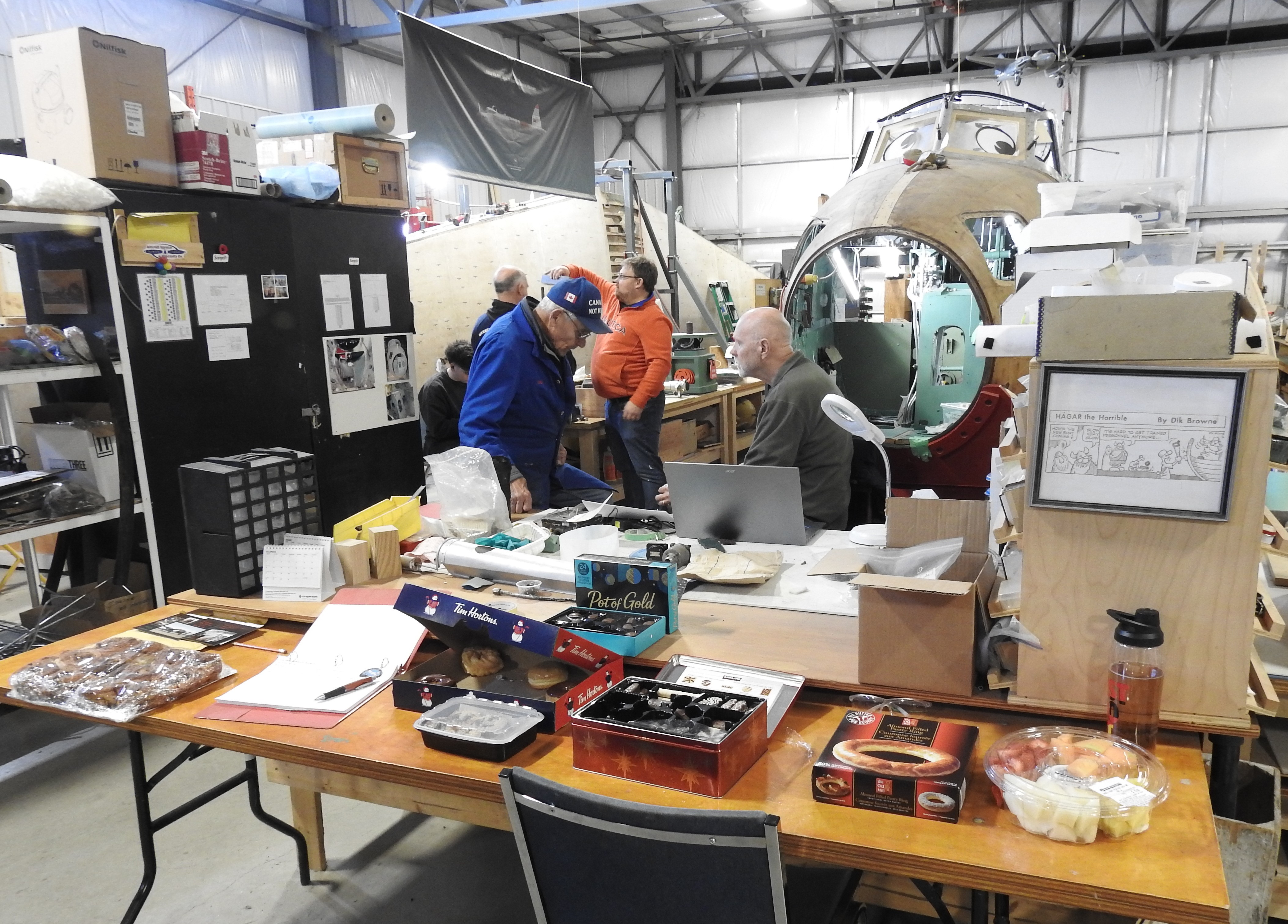
Beautiful old airplanes, good friends with a common cause, and a table full of holiday goodies are all compelling reasons to make the hour-long drive to Nanton on Saturdays.
If anyone needs to refresh their Mosquito Society duds, we just reordered both styles of t-shirts and we have a complete range of sizes available. See below:
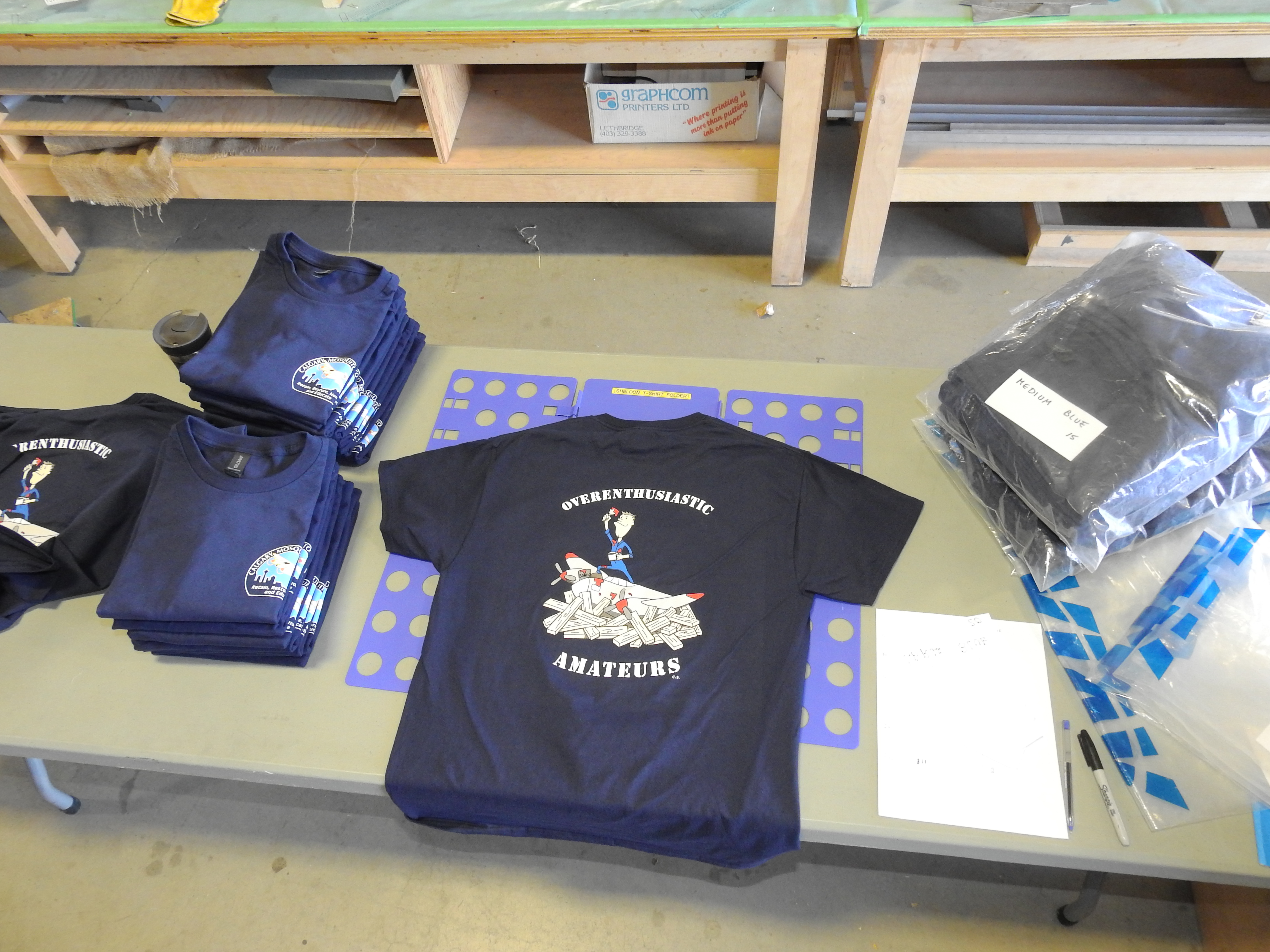
This time of year, also means paperwork for the Prez and for our Treasurer, Colette P.: Donation receipts, reports, tax receipts for mileage expenses and an annual report of all expenditures. It ain't all 'getting your hands dirty glamour'.
And that's a wrap for 2025.

Richard de Boer, President
January 9, 2026

Website - Calgary Mosquito Aircraft Society